 Image 1 of 1
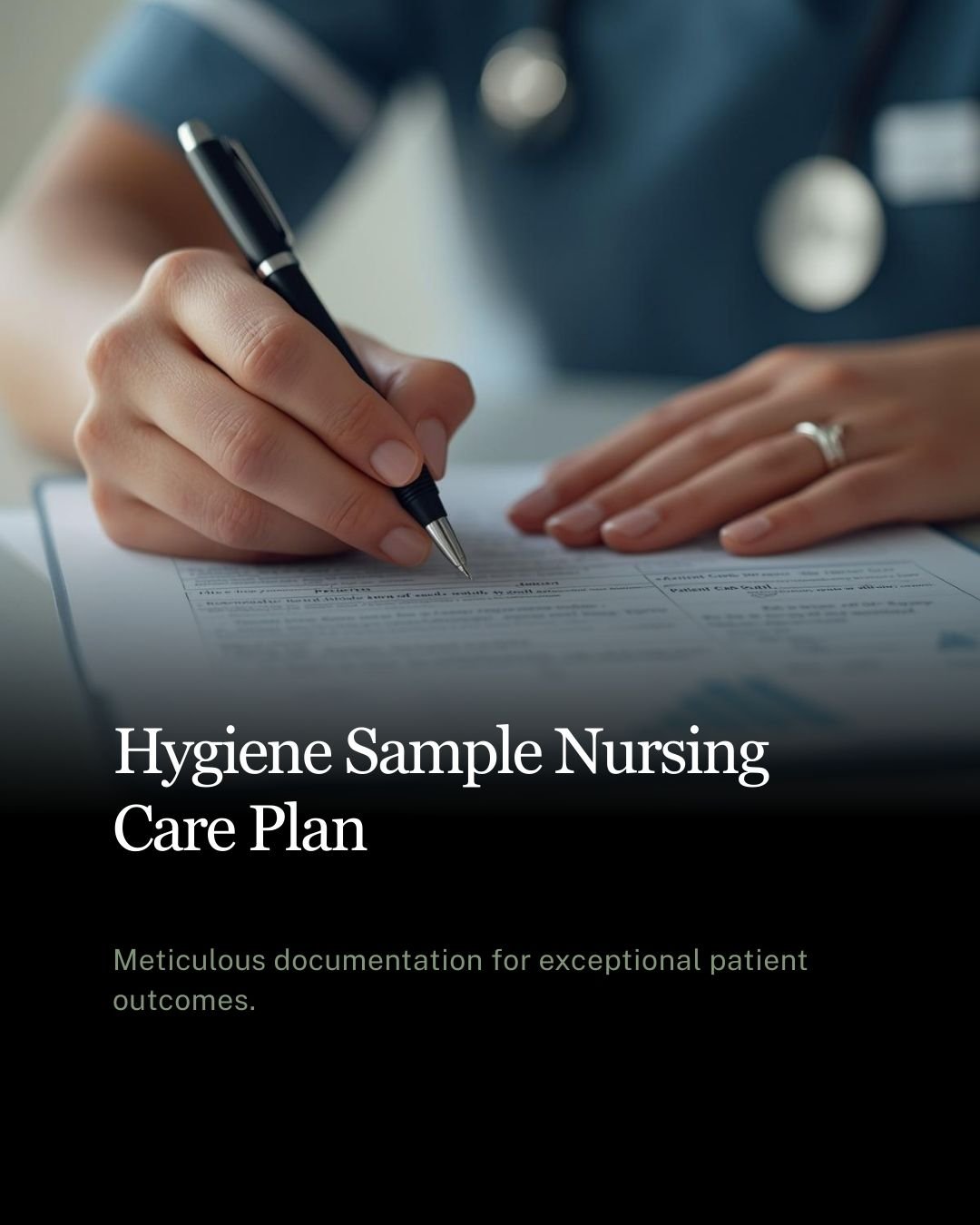
Hygiene Nursing Care Plan
Assessment
Data collection:
Patient demographics: age, mobility status, cognitive status, cultural/religious preferences, skin type, continence status.
Current hygiene practices: frequency of bathing, oral care, hair and nail care, shaving, perineal care.
Physical assessment: skin integrity (redness, breakdown, moisture, wounds), oral mucosa, dentition, hair/scalp condition, nails, presence of body odor.
Functional assessment: ability to perform ADLs (bathing, grooming, toileting), need for assistive devices, endurance, pain level during hygiene activities.
Psychosocial assessment: self-image, mood, willingness to accept help, cultural or personal preferences about modesty and same-gender care.
Risk factors: immobility, diabetes, incontinence, malnutrition, neuropathy, vascular disease, reduced sensation, cognitive impairment.
Nursing Diagnoses (examples)
Self-care deficit: bathing/hygiene related to decreased mobility and weakness.
Risk for impaired skin integrity related to incontinence and limited ability to reposition.
Risk for infection related to poor oral hygiene.
Impaired social interaction related to altered body image and poor hygiene.
Knowledge deficit (patient/caregiver) related to lack of information about skin care and infection prevention.
Goals/Outcomes (SMART)
Short-term: Patient will demonstrate or participate in a full bath or assisted hygiene session daily within 48 hours.
Short-term: Skin will remain intact with no new areas of breakdown during hospital stay.
Short-term: Oral mucosa will be free of debris and bleeding; patient will perform independent oral care twice daily within 72 hours (if cognitively able).
Long-term: Patient/caregiver will demonstrate correct hygiene techniques (bath, perineal care, oral care, nail care) and identify when to seek help prior to discharge.
Interventions and Rationale
Assess skin and baseline hygiene status at least once per shift.
Rationale: Early detection of redness, moisture, or breakdown allows prompt intervention.
Develop a personalized hygiene schedule respecting patient preferences, cultural practices, and energy levels (e.g., partial bed bath, towel bath, shower, or bathing every other day if appropriate).
Rationale: Tailored plans increase adherence and preserve dignity.
Assist with bathing as needed using gentle, pH-balanced cleansers and warm water; avoid vigorous scrubbing; pat dry skin thoroughly, especially skin folds.
Rationale: Gentle cleansing prevents skin damage; thorough drying reduces moisture-associated skin breakdown.
Implement incontinence management: prompt perineal care after soiling, use of moisture barriers (e.g., zinc oxide), scheduled toileting or bladder training when appropriate, and appropriate incontinence products.
Rationale: Reduces risk of dermatitis and infection.
Perform oral care at least twice daily and more frequently for NPO or ventilated patients; use soft toothbrush, antiseptic mouth rinse as ordered, and moisturizers for dry mucosa.
Rationale: Maintains oral mucosal integrity, reduces bacterial colonization, lowers risk of aspiration pneumonia.
Provide nail and foot care: trim nails straight across if no peripheral vascular disease or diabetes; inspect feet daily; refer to podiatry for diabetic foot care.
Rationale: Prevents ingrown nails, fungal infections, and foot ulcers.
Hair and scalp care: comb/brushing as tolerated, shampooing per schedule; provide respectful hair care practices considering cultural hairstyles (braids, locs, extensions) and avoid unnecessary removal.
Rationale: Promotes comfort, self-esteem, and prevents damage to hair/scalp.
Shaving: use electric razor for patients on anticoagulants; provide skin protection and avoid cuts.
Rationale: Decreases risk of bleeding and infection.
Promote independence: encourage patient participation at highest level possible; use assistive devices (grab bars, shower chairs, long-handled sponges) and provide step-by-step guidance.
Rationale: Maintains function and self-esteem, reduces caregiver burden.
Educate patient and caregivers on proper techniques: hand hygiene, skin inspection, signs of infection, frequency of hygiene, safe use of bath aids, and product selection.
Rationale: Empowers self-care and prevents complications post-discharge.
Address barriers: schedule hygiene at times that align with pain control, rest periods, and cultural practices; provide privacy and same-gender caregiver when preferred and possible.
Rationale: Increases comfort and compliance; respects dignity and cultural needs.
Document hygiene provided, patient response, skin condition, any lesions or concerns, and education given.
Rationale: Ensures continuity of care.
Hygiene Nursing Care Plan
Assessment
Data collection:
Patient demographics: age, mobility status, cognitive status, cultural/religious preferences, skin type, continence status.
Current hygiene practices: frequency of bathing, oral care, hair and nail care, shaving, perineal care.
Physical assessment: skin integrity (redness, breakdown, moisture, wounds), oral mucosa, dentition, hair/scalp condition, nails, presence of body odor.
Functional assessment: ability to perform ADLs (bathing, grooming, toileting), need for assistive devices, endurance, pain level during hygiene activities.
Psychosocial assessment: self-image, mood, willingness to accept help, cultural or personal preferences about modesty and same-gender care.
Risk factors: immobility, diabetes, incontinence, malnutrition, neuropathy, vascular disease, reduced sensation, cognitive impairment.
Nursing Diagnoses (examples)
Self-care deficit: bathing/hygiene related to decreased mobility and weakness.
Risk for impaired skin integrity related to incontinence and limited ability to reposition.
Risk for infection related to poor oral hygiene.
Impaired social interaction related to altered body image and poor hygiene.
Knowledge deficit (patient/caregiver) related to lack of information about skin care and infection prevention.
Goals/Outcomes (SMART)
Short-term: Patient will demonstrate or participate in a full bath or assisted hygiene session daily within 48 hours.
Short-term: Skin will remain intact with no new areas of breakdown during hospital stay.
Short-term: Oral mucosa will be free of debris and bleeding; patient will perform independent oral care twice daily within 72 hours (if cognitively able).
Long-term: Patient/caregiver will demonstrate correct hygiene techniques (bath, perineal care, oral care, nail care) and identify when to seek help prior to discharge.
Interventions and Rationale
Assess skin and baseline hygiene status at least once per shift.
Rationale: Early detection of redness, moisture, or breakdown allows prompt intervention.
Develop a personalized hygiene schedule respecting patient preferences, cultural practices, and energy levels (e.g., partial bed bath, towel bath, shower, or bathing every other day if appropriate).
Rationale: Tailored plans increase adherence and preserve dignity.
Assist with bathing as needed using gentle, pH-balanced cleansers and warm water; avoid vigorous scrubbing; pat dry skin thoroughly, especially skin folds.
Rationale: Gentle cleansing prevents skin damage; thorough drying reduces moisture-associated skin breakdown.
Implement incontinence management: prompt perineal care after soiling, use of moisture barriers (e.g., zinc oxide), scheduled toileting or bladder training when appropriate, and appropriate incontinence products.
Rationale: Reduces risk of dermatitis and infection.
Perform oral care at least twice daily and more frequently for NPO or ventilated patients; use soft toothbrush, antiseptic mouth rinse as ordered, and moisturizers for dry mucosa.
Rationale: Maintains oral mucosal integrity, reduces bacterial colonization, lowers risk of aspiration pneumonia.
Provide nail and foot care: trim nails straight across if no peripheral vascular disease or diabetes; inspect feet daily; refer to podiatry for diabetic foot care.
Rationale: Prevents ingrown nails, fungal infections, and foot ulcers.
Hair and scalp care: comb/brushing as tolerated, shampooing per schedule; provide respectful hair care practices considering cultural hairstyles (braids, locs, extensions) and avoid unnecessary removal.
Rationale: Promotes comfort, self-esteem, and prevents damage to hair/scalp.
Shaving: use electric razor for patients on anticoagulants; provide skin protection and avoid cuts.
Rationale: Decreases risk of bleeding and infection.
Promote independence: encourage patient participation at highest level possible; use assistive devices (grab bars, shower chairs, long-handled sponges) and provide step-by-step guidance.
Rationale: Maintains function and self-esteem, reduces caregiver burden.
Educate patient and caregivers on proper techniques: hand hygiene, skin inspection, signs of infection, frequency of hygiene, safe use of bath aids, and product selection.
Rationale: Empowers self-care and prevents complications post-discharge.
Address barriers: schedule hygiene at times that align with pain control, rest periods, and cultural practices; provide privacy and same-gender caregiver when preferred and possible.
Rationale: Increases comfort and compliance; respects dignity and cultural needs.
Document hygiene provided, patient response, skin condition, any lesions or concerns, and education given.
Rationale: Ensures continuity of care.